


You see, the thing to know about me, is that while I’ve spent my entire professional career talking about filmmaking and home entertainment, and reporting on every physical media format from VHS and LaserDisc to 4K UHD and Digital—and while I love those topics dearly and know them inside out—the truth is that spaceflight is what I’ve always been most passionate about… and it’s not even close.
So as exciting as it’s been to see my favorite films go from analog 480i to digital 4K, it’s been just as depressing to see the lack of spaceflight progress over that same time (at least until recently). Politics, economics, and simple apathy have for decades ensured that we’ve basically gone nowhere in space. I appreciate the achievement of the International Space Station, but we’re only a few years away from it being decommissioned. It’s just too damn old.
For decades now, film and television depictions have been the only option to witness any kind of progress in spaceflight. But though there have been many good sci-fi explorations of the topic over the years… there are only a few truly great ones.
While I enjoy tales of alien creatures, robots, space fleets, and zap guns as much as anyone, that’s largely the province of space opera or space fantasy. And while I like a good dystopian thriller as much as the next person, that doesn’t really interest me either.
I want science in my science fiction.
More importantly, I want optimism in my science fiction!
I crave films and TV series that make me believe me humanity still has a bright future out among the stars. Because we need that vision now more than ever.
And because the alternative is too depressing to contemplate… and I’m too stubborn to give up on the dream.
This is one of the reasons why I enjoyed the short-lived Star Trek: Enterprise. Here was a series—though flawed to be sure—that tried to show us how humanity might get from today’s astronauts and cosmonauts to the likes of Kirk, Spock, McCoy, Uhura, Scotty, Chekov, and Sulu.
Sadly, it’s also why I’ve fallen out of love with Star Trek in the Abrams and Kurtzman eras. The former seemed interested only in “Fire all phasers!” space adventure. By the time of Star Trek: Beyond, its Captain Kirk was even bored of space travel. (And you simply do not understand either Star Trek or the character of James T. Kirk if you think he’d ever lose interest in space exploration.) That is an EPIC failure.
Meanwhile, Kurtzman and company have dedicated themselves to the destruction of that optimistic future (not to mention its key institutions—the Federation and Starfleet) by using Star Trek as a vehicle to beat their viewers over the head with today’s cultural agendas and grievances. And if, for whatever reason, you find that distasteful and say so, they’ve simply doubled down with an air of smug superiority.
Christ, I hate post-modernism.
Which brings me back to For All Mankind, a series that dares to share a bold and hopeful vision of how the nations of the Earth might have taken—and might still take—a different path, one that leads us… at long last… to the stars.
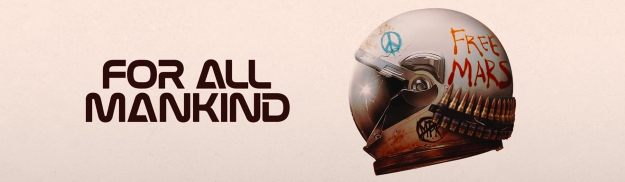
I love this series for its sheer ambition.
It starts in the Apollo era, as the Soviet Union manages to put the first human being on the Moon. And then it asks: How will America respond?
The series’ first season fully embraces Apollo 13 and The Right Stuff, while getting so much of the detail, technology, and cultural texture of the late 1960s and early 70s exactly right, as it blends its fictional characters and missions with real NASA history.
Then it jumps a decade to the 1980s, becoming more like Gravity as the series’ second season covers the Space Shuttle era and as-yet unrealized NASA plans for a Moonbase—getting all those details right too.
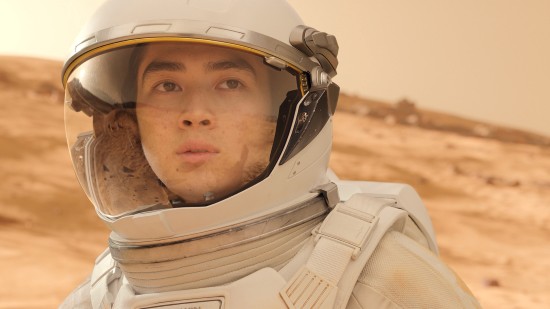
Its third season embraces The Martian as Earth’s nations and aerospace companies race to land the first human beings on Mars in the 1990s.
In its fourth and fifth seasons, the series jumps to the early 2000s and 2010s respectively, heading roughly in the direction of The Expanse, as humanity’s first outpost on Mars becomes a colony and then a community, trending inevitably toward self-sufficiency and independence, against the wishes of its geo-political overlords back on Earth.
And the show does all of this, while staying true to a path that might one day lead to a Star Trek-like future.
Naturally, there are bumps along the way—personal wins and tragedies, successful missions and terrible sacrifices, foolish rivalries and unlikely allies. Beloved characters die. Some make inspired decisions, but bad ones too. Friends find themselves on opposite sides of a moral dilemma or political conflict.
Because that’s who human beings are… mostly well-meaning yet messy. Complicated.
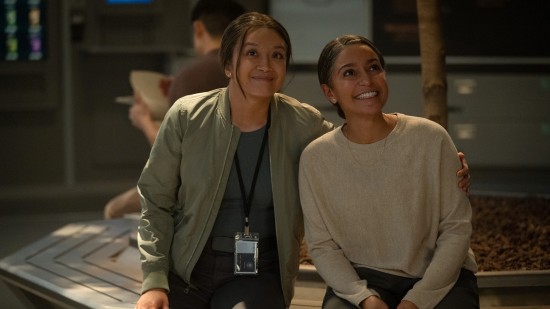
If humanity is going to reach for the stars, and colonize the Moon and Mars, those individuals aren’t all going to be Neil Armstrong, James T. Kirk, or Sally Ride. Some of them are going to be Miles Dale, Aleida Rosales, and Irina Morozova. Some of them might be your neighbor. And they aren’t all going to be Americans or Russians… or even Western.
The problem for some viewers however, is that if you like The Right Stuff more than The Martian… or if you like Neil Armstrong more than Miles Dale… you’re going to have a hard time with a series that’s designed, by its very nature, to evolve from season to season, introducing new characters at every turn. The decade-long jumps also mean that the characters change, finding themselves in very different places in their lives from season to season. This too can be jarring for viewers.
And whatever your political, social, or identity perspective might be, if you only watch content through the lens of that perspective, without ever endeavoring to step back for a broader view, you’re not likely to be open to anything that challenges your preconceptions. Because For All Mankind is designed to do exactly that as well.
But I love that this series asks hard questions… and it’s not afraid of getting into the weeds—the science, politics, and simple human psychology of colonizing space.
Is spaceflight worth the expense? Is it worth risking lives? Which sacrifices are necessary and which are too much? Who benefits from the results? Who pays for a Mars colony? What happens if the interests of those paying conflict with the interests of the colonists themselves? What happens when your colony runs out of food? Who decides who lives or dies in that moment—a democratically elected leader or an aerospace company CEO?
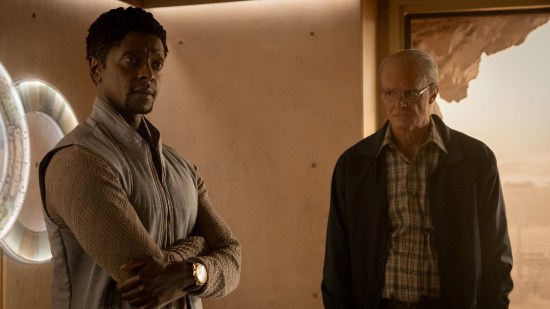
Who are we as a people—not just as Americans, or Russians, or Chinese, but as a species? What’s our purpose in this life? What does a future worth fighting for look like? Is humanity destined for the stars, or are we forever condemned to live out our entire existence on a single lonely planet we seem terrible at caring for? And if we are destined to reach the stars, how do we get from here to there without killing each other first?
Great science fiction confronts us with answers we might not necessarily like, and that force us to step back and rethink our perspectives. And that’s exactly as it should be; the very act of leaving Earth and looking back at our planet from deep space—or of looking out into an unfathomably vast and indifferent universe—changes us profoundly.
Don’t believe it? Just listen to the interviews of NASA’s Artemis II astronauts talking about their recent experience flying around the Moon. Listen to anyone who’s been to space.
If science fiction only ever entertains, gives you exactly what you want, or reinforces what you already believe… it probably isn’t great in the sense of the best examples of the genre.
And if only want your favorite characters to do things you approve of, or to make decisions with which you agree, you’re not open to the genre’s greatest possibilities. Personally, I don’t watch science fiction—or anything really—simply to be entertained. I want to engage with ideas, with possibilities, with things I hadn’t considered! I want to walk in another person’s shoes, to see things from different perspectives, to gain a deeper understanding.
That’s the role of science fiction… and great science fiction has a high bar to clear indeed.
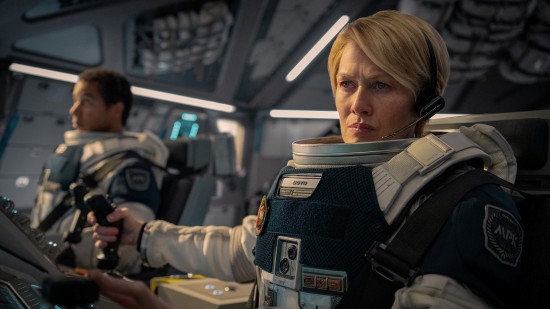
For All Mankind doesn’t always succeed in clearing that bar, but it always dares to try.
This series challenges itself with period accuracy, with depicting the technical details of spaceflight—both real and speculative—and with presenting true-to-life and complicated geopolitics that transcend childish notions of binary good or evil, right or wrong. It strives to weave complicated and nuanced storylines that drive its characters to grow and change, to live messily but truthfully, and often to fail as well as succeed.
And if those characters sometimes make moral choices we would find hard to justify ourselves, it’s worth remembering that they’re making them in an alternate reality, having lived full lifetimes in a history—which inevitably guides and calibrates our moral compass—that’s played out very differently than our own.
To be fair, some of the criticism For All Mankind has received is valid. The actions of Danny and Jimmy Stevens, for example, pushed the limits of credulity in Seasons Three and Four. But I also tend to think that those who claim the series is too melodramatic misunderstand the meaning of melodrama. What they’re reacting to instead is the show’s sincerity in embracing its core premise.
Human beings often react in rash, unexpected, or self-destructive ways. Even astronauts. The best of us can have a bad day, and the worst of us can get lucky. It’s well worth remembering that this series routinely places its characters in the most extreme situations imaginable.
I’ve also heard claims that the show is boring—which I find patently ridiculous, unless you’re only interested in aliens, robots, and zap guns. Or that the show has a “nepotism” problem, as the children of early characters play major roles in later seasons.
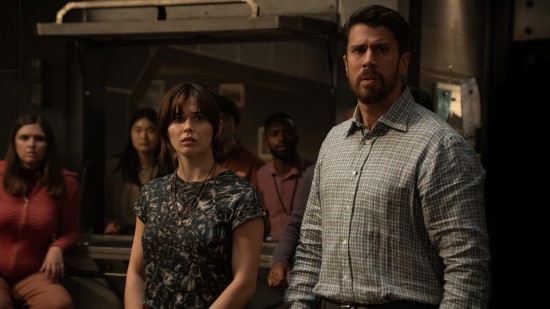
But imagine that your parents are explorers or simply brave enough to seek a fresh start on Mars. Now imagine you’re their child, born on a new world and destined to live out your life in pressurized modules, never to breathe fresh air or feel the wind on your face. You might, in those circumstances, have some pretty strong feelings. You might even decide to take charge of your own destiny, especially given your parents’ example.
Of course, everyone watches film and TV content for different reasons, and everyone has things they like or not—that’s the nature of human beings. I like chocolate, you like vanilla. Neither of us is right or wrong. All I can do is explain what I believe, and why… and you may agree or disagree. But maybe we can better understand each other in the process.
So here’s what I believe, and I believe it wholeheartedly: For All Mankind is one of the best near-future depictions of what a viable path to a bright human destiny in space might look like that we’ve ever seen. It’s a series I’ve been waiting my entire life to see. And I’m grateful to Apple TV, and to everyone involved for bringing it to life.
For my money, Season Five has breathed new life into this series by introducing compelling young characters and extending humanity’s reach farther out into our solar system. And while the now-in-production Season Six will be For All Mankind’s last… it’s not the end of the story.
Because I’m thrilled to say that the first two episodes of its new spin-off series are now available on Apple TV as well!

Also created by Nedivi, Wolpert, and Moore, Star City takes place in the same alternate history as For All Mankind. (It’s named for the real home of the Russian space program near Moscow.) And it begins at essentially the same moment, the revelation that the first human being to reach the Moon is cosmonaut Alexei Leonov. But this time, our perspective as viewers is that of the Soviets.
You see… the key turning point in this alternate history is that Sergei Korolev, the father of the Soviet space program (here played by Rhys Ifans, of Notting Hill fame), survived routine surgery in 1966. (In our reality, he did not.) So Korolev’s famed N1 rocket managed to launch successfully before the American Saturn V was ready, thus enabling the Soviets to reach the Moon first.
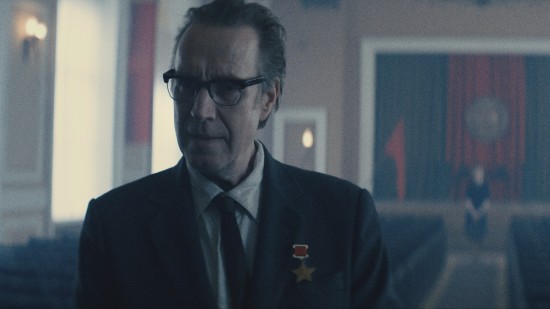
In the new series, Korolev is referred to only as “Chief Designer,” which is historically accurate: The Soviets kept his identity secret, fearing that the American CIA would attempt to assassinate him… or worse, convince him to defect to the West. (Korolev spent nearly six years in a Siberian gulag after being arrested in Stalin’s Great Purge.) And to say that Ifans is terrific in the role would be an understatement.
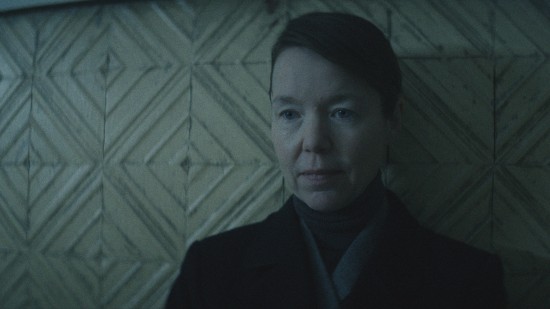
But the rest of the cast is excellent too, including Anna Maxwell Martin (Bleak House) as the head of KGB security at Star City; Adam Nagaitis (The Terror), Solly McLeod (House of the Dragon), and Alice Englert (Beautiful Creatures) as cosmonauts; and Ruby Ashbourne Serkis (The Letter for the King, and daughter of Andy Serkis) as one of the cosmonauts’ wives. And here’s where things get interesting: Agnes O’Casey (Ridley Road) and Josef Davies (Young Wallander) appear as well, playing younger versions of key characters that will be familiar to viewers of For All Mankind: Irina Morozova and Sergei Nikulov.
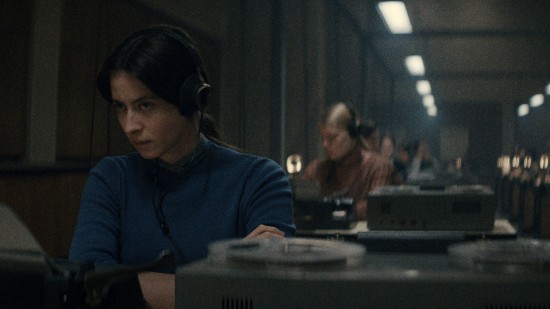
The story is simple: In the wake of Korolev’s triumph on the Moon, and word that the Americans have somehow stolen his designs, the Soviet Premier demands that Korolev beat the Americans again by building a base on the Moon. Yet Korolev has his sights set on an even bigger prize: Beating the Americans to Venus. And with the KGB tightening security, watching—and listening—to seemingly everyone in Star City, Korolev’s gambit is a dangerous one indeed.
While Star City’s dramatic approach is not dissimilar to For All Mankind, its European cast and crew, not to mention its production in Vilnius (Lithuania), give the show a very different feel and texture that takes a bit of adjustment as a viewer. In look and tone, it’s like a cross between the BBC’s 1979 Tinker Tailor Soldier Spy and HBO’s more recent Chernobyl (2019) miniseries—in fact, it uses many of the same locations as Chernobyl.
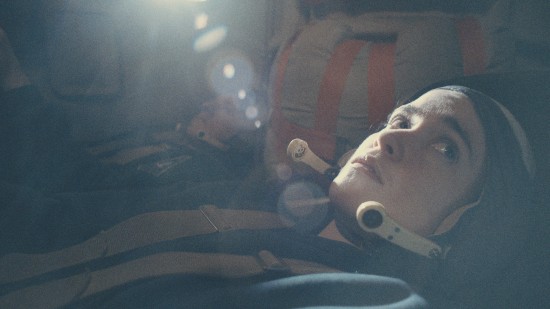
I wouldn’t even be surprised if the series had employed vintage Soviet-era camera lenses to help recreate the look of the period. The cinematography is stylish, with depth of field that’s frequently shallow, so faces remain in focus but backgrounds (and the edges of the frame) appear soft. The imagery has a creamy quality, with medium to strong grain, and the color grading, costumes, and production design all take full advantage of the earthy and muted hues authentic to the place and period.
Once again, the writers blend real individuals and space missions with fictional ones, but at every step they’re steeped in authentic Soviet historical and technical accuracy—a tremendous achievement, as it’s only in recent years that the full and true history of the Soviet space program has been revealed to the West. And they’ve created a terrific slow-burn narrative that weaves together Cold War spy tension, nuanced and compelling character development, and gripping spaceflight drama.
It’s as if the filmmakers took everything they’ve learned while making For All Mankind here in the States and elevated their game to a whole new level. And I would argue that the actors’ performances in this show are even more subtle, accomplished, and sophisticated.
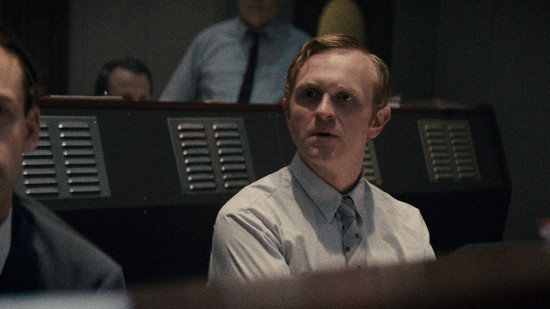
Star City, in short, is a triumph. I’ve seen five of the first season’s eight episodes, and I’ve watched them multiple times now. I’m in awe of what Nedivi, Wolpert, Moore, and their team have achieved here… and even more impressed that Apple TV has decided to back this series.
Now… as I noted a moment ago, the series is a slower burn. So if you’re prone to thinking that For All Mankind is boring, you’re probably not in the target audience for Star City. It’s also filmed in English, and its mostly Western European actors are allowed to speak in their own accents (which takes a bit of getting used to). But if you love great drama, John le Carré-style spy thrillers, and you’re in the mood for a high-quality series in the vein of the very best of HBO… Star City is it. And of course, if you’re interested in the complete history of human spaceflight, this series offers a rich history indeed.
I am deeply grateful to Nedivi, Wolpert, Moore, and everyone involved in the making of For All Mankind and Star City. And I want to thank Sony Pictures Television and Apple TV for supporting these shows (and Foundation too, for that matter).
If I can make a humble request: Please see that these series find their way to Blu-ray Disc and especially 4K Ultra HD one day soon—they’re just too good to live only in the cloud via streaming.
In the meantime, I am a very picky customer when it comes to science fiction. But the makers of these shows have earned both my respect… and my trust.
For All Mankind is one of the best dramas currently on television, streaming or otherwise… and it is great science fiction. I have little doubt that Star City will be too.
Don’t miss them!
- Bill Hunt
(You can follow Bill on social media on Twitter/X, BlueSky, and Facebook, and also here on Patreon)