

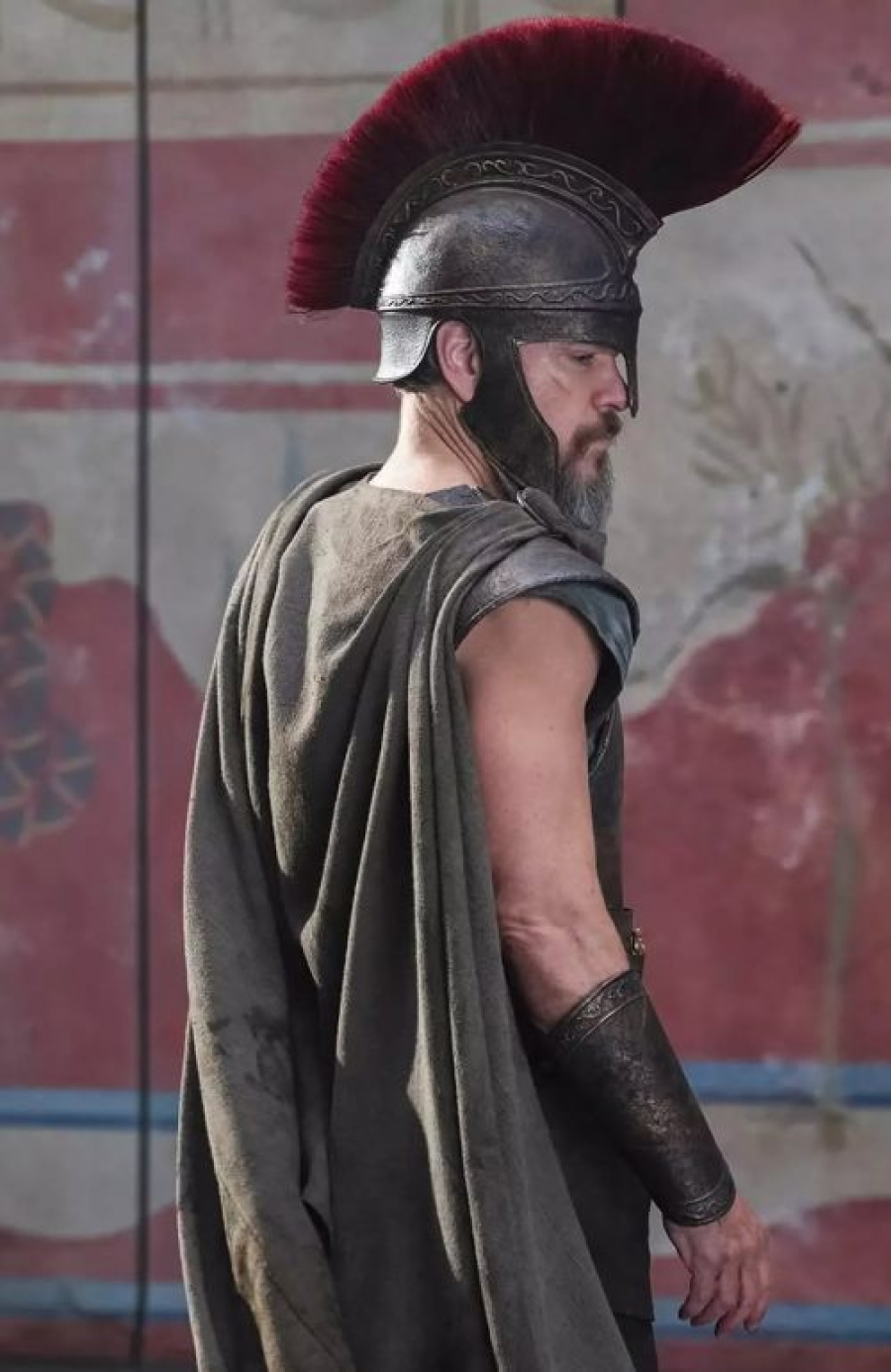


All right, now let’s talk The Odyssey… I was able to take in a screening of Christopher Nolan’s latest epic last Thursday night here in SoCal, and I wanted to share my thoughts on the experience.
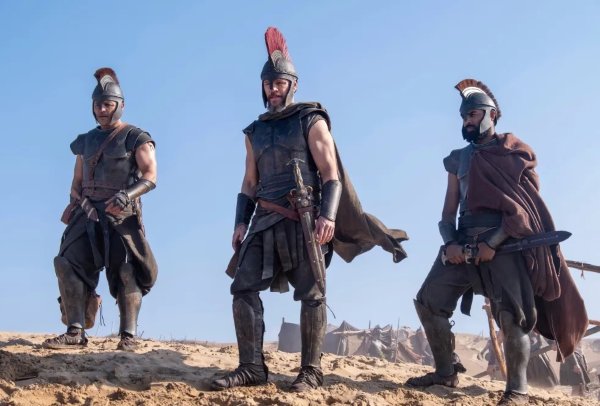
First of all, I quite liked the film. Straight off the bat, if I’m grading it 1-10, it’s a solid 8.5. It’s very enjoyable, and an impressive large-format visual experience, as one would expect of any Nolan film.
I think the actors are excellent nearly across the board, with perhaps the sole exception of Tom Holland (who certainly isn’t bad in any way, but I do think he was miscast as Telemachus).
As I suspected, the so-called casting controversy was much ado about nothing: Lupita Nyong’o and Elliot Page were perfectly fine in their respective roles, and more significantly each of them had less than five minutes of screen time. So the whole bruhaha was silly and blown wildly out of proportion, as such things tend to be on social media.
And while even a three-hour film can’t do justice to the fullness of Homor’s original epic poem, I think Nolan’s adaptation does a credible job of representing the story and it certainly sustains the dramatic energy throughout.
There are real standout scenes here, including the siege of Troy, encounters with the Cyclops, the Laestrygonians, and particularly Circe, and Odysseus’ visit to Hades.
But ultimately… here’s the thing: Most Nolan films score around an 8.5 out of 10, in my opinion. Yet I keep waiting for him to make a true 10 out of 10—a genuine, perfect masterpiece—and, for me, he still hasn’t done it yet.
He’s certainly gotten close a few times. His best films—The Prestige, The Dark Knight, Inception, Dunkirk, Oppenheimer—are the cinematic equivalent of intricate clockwork mechanisms, each technically very precise and impressive.
But most Nolan films tend to be about cold, calculating figures in dire circumstances and bleak environments. And nearly all of them are missing authentic and genuine heart—that human quality that makes you really connect emotionally (as opposed to just intellectually) with the work.
Interstellar is the perhaps the closest exception, and that might be why the film has grown so much in appreciation over the years with fans.
Another issue, in my opinion, is that Nolan tends to fetishize certain aspects of his productions in a way that I think undermines the result he’s trying to achieve. For example, the need to shoot everything in large format 65mm, which I think gets in the way of the emotional intimacy of his characters in some scenes.
Another example: His insistence that if you were really in the situations his characters are in, you wouldn’t be able to clearly hear what people are saying around you, so he makes sure you can’t understand all the dialogue in his sound mixes, thus pulling you out of your immersion in his film.
Or yet another case in point: His insistence in capturing some things entirely practically, in camera, while eschewing the use of digital VFX not always but at odd times. Example: Oppenheimer’s Trinity test, which the entire film builds to but which ultimately looks more like a big gas-bomb explosion rather than a genuine atomic blast.
Issues like this make it more difficult for Nolan to really stick the landing on his films, in a way that—say—Denis Villeneuve is able to do with seeming regularity these days.
In any case, such criticisms aside, Nolan remains a filmmaker who’s long since earned my respect, so I’ll keep seeing anything he sees fit to deliver to the big screen. And I’ll keep rooting for him to really knock one out of the park.
The Odyssey is not only well worth seeing, it’s worth seeing on the biggest possible screen you have access to.
But... if you’re trying to see the film in the very best format—true 15-per 70mm—that might be a challenge at the moment, because there are currently only 25 theaters in the United States capable of showing the film in that format. And tickets (at least here in Southern California) are sold out for these screens up to five weeks in advance.
What’s more, the 15/70 IMAX projector at the Regal Irvine Spectrum (in Orange County, CA) apparently overheated this past weekend, causing a number of screenings to be disrupted. And the problem here is that—per IMAX CEO Richard Gelfond in this recent Variety piece—the company can no longer make 15/70 IMAX projectors; they don’t have a complete set of the original engineering blueprints, the institutional knowledge to build them has dwindled, and the parts supply chains have long since dried up. The company does still make IMAX projectors, just not the 15/70 kind, the last of which was produced over 50 years ago now. So what they focus on instead is repairing, upgrading, and maintaining the existing projectors as best they can, while focusing on making new IMAX digital units.
That’s not to say that it’s impossible for IMAX to make new 15/70 projectors, but currently the economics to do so just aren’t practical. Who would pay for the R&D, the cost of rebuilding supply chains, and the effort required to reach profitable manufacturing at scale? IMAX, the studios, the theater chains? Like it or not, and so far regardless of the interest of filmmakers like Nolan, film distribution in 15-per 70mm just isn’t a profitable and cost-effective business these days. But who knows? Maybe the obvious and growing interest in seeing films in this format will lead to a change in the status quo.
I do think this is an important lesson for all of us regardless: Whether it’s IMAX projectors or Moon rockets… technology, knowledge, experience—these things aren’t like monuments that you build out of stone or bronze and then last for eons. You have to keep reinvesting in the capacity, keep innovating, keep passing the knowledge down to the next generation. Or you eventually lose that knowledge, or ability to do such things.
You have to keep exercising those muscles, or they tend atrophy. Put another way: Use it or lose it, folks!
“You should consider that the essential art of civilization is maintenance.” –Pete Seeger
That’s all for now. Stay tuned…
- Bill Hunt
(You can follow Bill on social media on Twitter/X, BlueSky, and Facebook, and also here on Patreon)